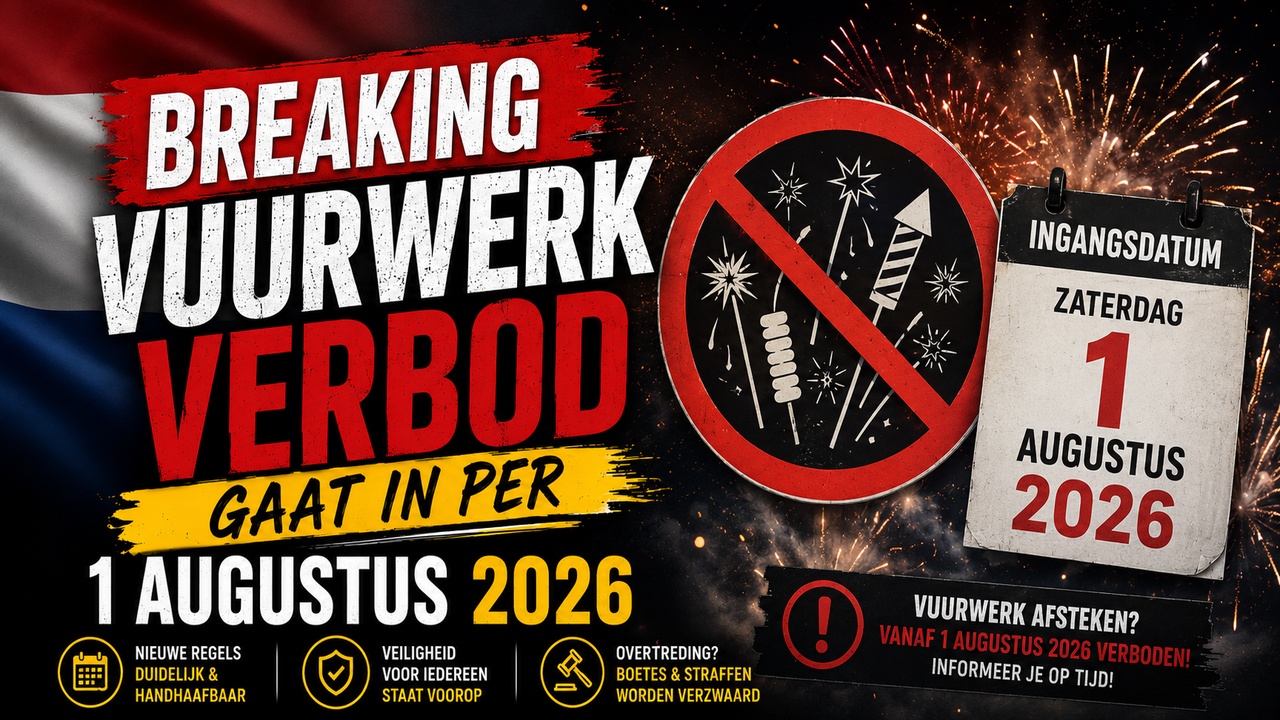
Fireworks Ban From August 1, 2026? Dutch Parliament Approves Nationwide Fireworks Ban
Fireworks Ban From August 1, 2026? Dutch Parliament Approves Nationwide Fireworks Ban
On June 4, 2026, the Dutch House of Representatives approved a nationwide fireworks ban. The intention is to introduce the ban as soon as possible, potentially from August 1, 2026.
If the proposal becomes law, consumers will no longer be allowed to set off consumer fireworks during New Year's Eve celebrations. This could mark the end of a tradition that has been part of New Year's celebrations in the Netherlands for many years.
The decision has sparked significant debate among fireworks enthusiasts, business owners, emergency services and politicians. Supporters expect fewer incidents, less damage and fewer fireworks-related injuries. Opponents question the effectiveness and enforceability of the ban and fear an increase in illegal fireworks.
When will the fireworks ban take effect?
After approval by the House of Representatives, the proposal must still go through additional legislative steps before it can officially take effect. The goal is to implement the fireworks ban on August 1, 2026, so that it applies to the New Year's Eve celebrations of 2026–2027.
As a result, many people are wondering what the fireworks ban will mean for consumer fireworks, fireworks stores and future New Year's celebrations.
What will remain allowed?
Not all fireworks will disappear. F1 fireworks, such as sparklers, pull-string crackers, snap pops and other low-risk fireworks products, will remain legal and available for purchase.
In addition, it will still be possible in certain cases to apply for permits or exemptions for organized fireworks displays. Foundations, associations and other organizations may, under specific conditions, receive permission to use fireworks during events.
Will F1 fireworks remain legal?
According to the current plans, F1 fireworks will remain legal. This category includes sparklers, pull-string crackers, snap pops and other low-risk fireworks products.
This means that part of the fireworks market will remain available to consumers even after the ban comes into force. Many fireworks enthusiasts are wondering whether F1 fireworks will eventually become the only category available without a permit.
What does the fireworks ban mean for consumers?
If the fireworks ban is implemented, it will have a major impact on consumers who traditionally set off fireworks during New Year's Eve celebrations.
Many fireworks enthusiasts are concerned about the future of consumer fireworks in the Netherlands. There is also significant discussion about buying fireworks abroad and the impact on Dutch fireworks retailers and importers.
Another important question is whether the ban will actually lead to less fireworks use during New Year's Eve celebrations.
Questions About Enforceability
Many questions remain regarding the practical enforcement of the fireworks ban. Consumer fireworks will still be available in countries such as Germany and Belgium, where they may continue to be sold under local regulations.
As a result, many people are questioning how effective a Dutch fireworks ban will actually be.
Critics also expect illegal fireworks trading to increase. There are concerns that fireworks could increasingly be imported through parcel delivery services from countries such as Poland and other European nations where regulations may differ.
There are also concerns that some individuals may attempt to create their own fireworks or explosive mixtures. This could lead to extremely dangerous situations resulting in serious injuries or even fatalities.
There are also doubts about enforcement capabilities. During New Year's Eve celebrations, police, fire departments and emergency medical services are already under significant pressure due to incidents and emergencies. Available resources are limited, making it impossible to monitor every street.
Furthermore, violations often need to be witnessed directly. Law enforcement officers must actually see someone setting off fireworks before action can be taken.
Buying Fireworks in Germany and Belgium Remains Possible
A frequently discussed topic is that consumer fireworks will remain available in neighboring countries such as Germany and Belgium.
Because of this, opponents of the ban expect more Dutch consumers to purchase fireworks across the border. Supporters argue that inspections and enforcement measures can still take place after the ban is implemented.
The debate surrounding fireworks purchases in Germany, Belgium and other European countries is expected to continue in the coming months.
Will There Be Additional Border Controls?
At present, there are no indications that additional resources or large-scale border controls will be introduced to prevent fireworks from entering the Netherlands from abroad.
This issue is also the subject of debate, since fireworks will remain available in neighboring countries. Opponents of the ban question whether it can be effectively enforced without additional efforts from police, customs authorities and other enforcement agencies.
Will a Fireworks Ban Really Make a Difference?
The major question remains whether a fireworks ban will actually lead to fewer disturbances, less damage and fewer accidents.
Supporters expect a reduction in incidents, injuries and pressure on emergency services. Opponents point out that illegal fireworks and cross-border purchases may continue, potentially limiting the impact of the ban.
Whether the fireworks ban ultimately achieves its intended goals will only become clear during future New Year's Eve celebrations.
Our Opinion
We have questions about the effectiveness of the fireworks ban. In our view, there is a risk of a so-called "waterbed effect," where the problem does not disappear but simply shifts elsewhere.
Since consumer fireworks remain available in several neighboring countries, we expect more people to purchase fireworks abroad. There is also a risk that illegal fireworks trading will increase.
We also believe that the underlying issues associated with New Year's Eve, such as riots, vandalism, arson and violence against emergency workers, will not automatically be solved by a fireworks ban. These issues often have broader causes than fireworks alone.
The number of injuries caused by legal consumer fireworks may decrease. However, there is also a risk that more people will turn to illegal fireworks. If this happens, the consequences could be more severe, as illegal fireworks are often more powerful and dangerous than products that were previously legal.
We also question whether overall fireworks use will decline significantly. During the coronavirus years, fireworks bans were also in place. Despite those restrictions, fireworks were still used in many locations.
For many people, this raises the question of whether a new ban will truly result in less fireworks use during New Year's Eve celebrations.
Ultimately, it may take several years to determine the true impact of the fireworks ban. Will it reduce injuries and public disturbances, or will the problem simply shift toward illegal fireworks and cross-border purchases? Only time will tell.
What Do You Think About the Fireworks Ban?
The nationwide fireworks ban could mark the end of a tradition that has long been part of New Year's Eve celebrations in the Netherlands.
At the same time, many questions remain about enforcement, illegal fireworks, cross-border purchases and the future of the Dutch fireworks industry.
Do you support the fireworks ban, or do you think it will have little effect? Leave your opinion in the comments and join the discussion about the future of fireworks in the Netherlands.
More Information About Fireworks and Fireworks Stores
Would you like more information about fireworks categories, fireworks stores or retailers in the Netherlands, Belgium, Germany, France and Luxembourg? Explore our complete overview of fireworks stores across Europe.
? View all fireworks stores in the Netherlands, Belgium, Germany, France and Luxembourg